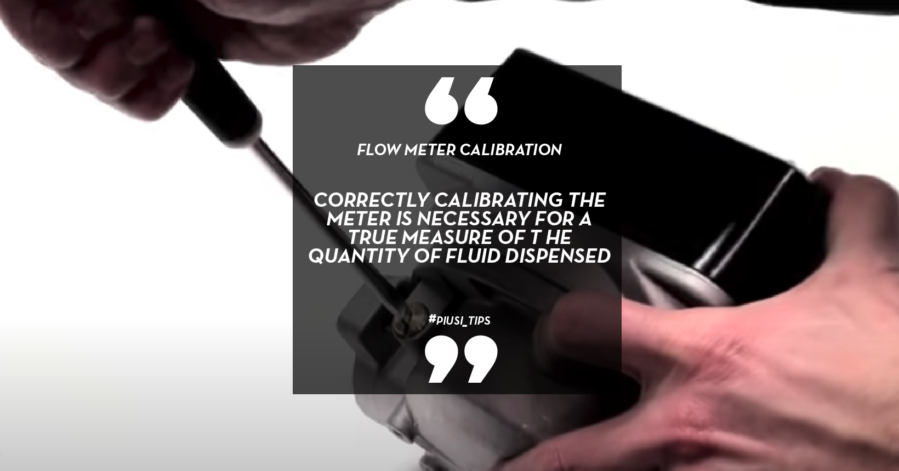
Correctly calibrating a meter is necessary for a true measurement of fluid dispensed.
A meter needs to measure and totalize the amount of fluid that passes through it whether the fluids are diesel, gasoline, oils or other lubricants or fuels with higher or lower viscosities.
Hence, it’s necessary to have a measurement as accurate as possible and falling within the promised precision. To achieve this, you need to correctly calibrate your meter and periodically conduct checks and re-calibration when necessary. Corrosion, fluid impurities, and usage itself are all variables that cause wear, over time, to even the most resistant, heavy-duty flow meters and makes calibration necessary to ensure accurate measurements.
These are some tips for all meters that we suggest you stick with:
1. ALWAYS CALIBRATE
Even if the meter is already calibrated by the manufacturing Company (PIUSI calibrates all of their meters during the production and testing phases), our advice is to re-calibrate it again. This is because the meter has to adjust to the real working condition: temperature, plant, fluid, and other variables.
2. AIR?
To be sure that the meter hasn’t counted the air that may be present in the system and that may have passed through the device, we always recommend discharging the air from the system and using a good foot valve on the suction side.
3. FIRST INSTALLATION, THEN CALIBRATION
Calibration is a procedure that has to be carried out only after the dispense system is fully installed, not before. This is because all the components of the system directly affect the transfer itself: the pipe length, the presence or lack of a filter, temperature, etc. These are all variables that may change results. Therefore, the rule is simple: first installation, then calibration.
4. TEMPERATURE: FRIEND OR ENEMY?
Huge temperature changes, especially weeks leading into or out of extreme winter and summer seasons, have a significant impact on the final count by acting on the fluid itself (which becomes, for example, more or less viscous). For this reason, it is good to recalibrate whenever there is a significant thermal change.
5. EACH FLUID HAS ITS OWN CALIBRATION
The calibration has to be carried out with the same fluid that will be used during the transfer procedure; it is not possible to calibrate a flow meter with oil that will be used with diesel.
6. GRADUATED CONTAINER: YOUR ALLY
How much fluid has to be dispensed to have a correct calibration? There is no universal answer. Certainly, it is necessary to use a fair amount of fluid depending on the fluid that will be dispensed. We suggest to always use a 20-liter (or 5-gallon) graduated container in which to dispense the fluid during the calibration procedure. If it is diesel, we suggest dispensing the total 20 liters. If it is an oil, 5 liters should be enough.
The indications above have to be considered as calibration advice. The technical product manuals, which are published online and are in all of the product packages, and online video tutorials should be read for all technical indications and operations.